New Caledonia 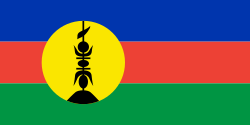
"81% of New Caledonians surf the Internet… The digital divide remains, especially in areas far from urban centers."
- New Caledonia Digital Barometer (2022 update)




Technology and Connectivity is one of the key thematic areas in the 2050 Strategy for the Blue Pacific Continent, recognising its vital role in shaping a resilient, inclusive, and forward-looking region. Reliable digital infrastructure, mobile coverage, and internet access are not only important in their own right, but also serve as enablers for other priority areas, education, health, climate resilience, economic development, and governance, all increasingly dependent on strong digital foundations.
Yet across the Pacific, digital access remains uneven, leaving many Pacific communities disconnected. Bridging this gap is a regional priority. This project visualises where the gaps are, helping to prioritise action that delivers measurable impact, especially for rural and underserved populations.
"81% of New Caledonians surf the Internet… The digital divide remains, especially in areas far from urban centers."
- New Caledonia Digital Barometer (2022 update)

"As the events of 2022 so cruelly showed us, internet connectivity is a lifeline for Tonga. Our economy and our society are dependent on well‑functioning domestic and international communications."
- Prime Minister Siaosi 'Ofakivahafolau Sovaleni
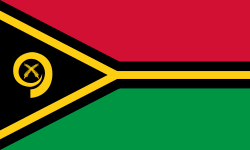
"Digital transformation initiatives are driving improved public service delivery and fostering a more connected and inclusive society across the country."
- Vanuatu Government (OGCIO and ICT Division)
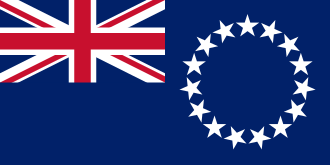
"Having improved and strengthened connectivity for our schools will revolutionise the teaching and learning experience…"
- Danielle Tungane Cochrane, Head of Ministry, Cook Islands Ministry of Education

"Niue's commitment to digital transformation focuses on sustainable development and inclusive connectivity for all citizens."
- Government of Niue

"Digital connectivity drives economic growth and social development across our Pacific communities."
- Ministry of Communications and Information Technology
"Connectivity solutions are essential for Kiribati's sustainable development and climate resilience efforts."
- Ministry of Information, Communications, Transport and Tourism Development
"Digital infrastructure development supports Tuvalu's goals for sustainable connectivity and economic growth."
- Tuvalu Telecommunications Corporation
"Our digital strategy focuses on connecting all islands and communities through reliable telecommunications infrastructure."
- Ministry of Digital Economy
"We must not merely manage the present; we must prepare for tomorrow's challenges."
- Prime Minister Hon. Jeremiah Manele
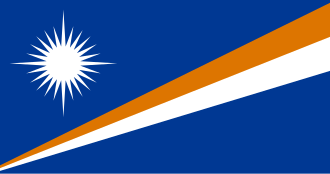
"Digital transformation is crucial for Marshall Islands' sustainable development and climate adaptation strategies."
- Ministry of Transportation & Communications
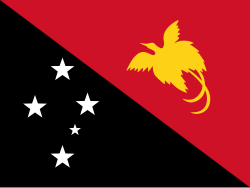
"Connecting PNG is not just about roads; it's about creating opportunities, empowering communities, and building a resilient economy…"
- Prime Minister Hon. James Marape

"Palau's submarine cable system now ensures fast and reliable internet to drive the nation's e-Government and education services."
- Palau National Communications Corporation

"Development and administration of sound policies and regulations ensure a reliable sea and air transportation system and communication network…"
- Department of Transportation, Communication & Infrastructure
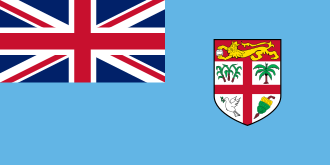
"Connectivity is the foundation of progress in today's and tomorrow's world."
- Prime Minister Hon. Sitiveni Rabuka

"Digital connectivity is essential for Nauru's sustainable development and connecting our communities to global opportunities."
- Government of Nauru
"While the digital revolution has presented many opportunities, in particular, for Island States such as ours, the challenges and complexities that come with the digital evolution require specialised capacities. I am confident that we all recognize and welcome the increased level of support and capacity development in this area across the region. However, for partnerships to be successful, they must be targeted, coherent, and effective."
Solomon Islands
Solomon Islands
Towers are up, but digital life, from school to health services remains out of reach for most.
With 11.9% internet usage, limited 4G (29.5%) and almost no fixed broadband (0.1 per 100), broadband access is a major limiting factor, especially for rural communities (74% rural).
Papua New Guinea
Papua New Guinea
Papua New Guinea faces one of the most significant digital access gaps in the region.
Only 11.2% of people are online despite 70% 4G coverage. With limited broadband access and 86% rural population, PNG remains largely disconnected, vulnerable in crises, cut off from essential systems and economic participation.
Palau
Palau
Infrastructure is in place, but adoption remains low.
While fixed broadband is relatively high (7.3 per 100), internet usage (34%) and 4G coverage (0%) remain low, limiting access to digital government and education, despite being mostly urban (82.4%).
Micronesia (FSM)
Micronesia (FSM)
FSM's 35% internet usage is higher than many Pacific neighbours, yet with no fixed broadband and poor 4G, many communities remain digitally underserved.
Geographic remoteness and limited infrastructure prevent the development of essential digital services such as online education, telemedicine, and disaster alert systems. Without focused investment, FSM risks falling further behind in the region's digital transition.
New Caledonia
New Caledonia
With 82% internet usage and 79.5% 4G coverage, New Caledonia ranks among the most connected in the region.
While French Polynesia leads in fixed broadband (35.6 per 100), New Caledonia's digital infrastructure is still advanced (19.4 per 100). The key challenge is extending access to outer islands and marginalised communities for services.
Vanuatu
Vanuatu
Vanuatu has strong mobile infrastructure, with 90% 4G coverage and 421 mobile broadband subscriptions per 100 people. Yet, only 25.7% of the population uses the internet, and fixed broadband access remains minimal.
The exceptionally high mobile subscription rate (421 per 100 people) points to widespread multi-SIM usage and shared or device-based connections. While mobile networks are widespread, fixed broadband has yet to take hold in everyday life.
Fiji
Fiji
Despite 92.9% mobile coverage, fixed broadband (2.53 per 100) is still beyond reach for much of the population.
To translate access into equity, cost, device access, and training and awareness are key to turning coverage into opportunity, and full digital participation.
Tonga
Tonga
Connected, yet still vulnerable.
With 96% 4G and 41.2% internet usage, Tonga is improving. But with 76.8% rural and low fixed broadband (8.17 per 100), resilience depends on strengthening digital continuity.
Marshall Islands
Marshall Islands
Geography shapes access, with digital development adapting to dispersed island life.
Internet usage stands at 38.7%, supported mainly by fixed broadband (2.35 per 100), as mobile infrastructure like 4G and mobile broadband is not yet available. The Marshall Islands' scattered atolls call for tailored, community-focused connectivity approaches rather than a one-size-fits-all model.
Nauru
Nauru
A compact nation, ready for full digital rollout.
With 90% 4G coverage, 57% internet usage, and good fixed broadband (9.96 per 100), Nauru has the foundations for universal access, but needs investment in usage and digital literacy.
Kiribati
Kiribati
Scattered islands, steady steps forward.
With 65% 4G coverage and growing mobile access (51.6 per 100), Kiribati is making progress. However, only 14.6% of people are online and fixed broadband remains very limited (0.04 per 100). Continued support in awareness, affordability, and community access can help more people benefit from these digital advances.
Tuvalu
Tuvalu
Connectivity is improving, with opportunities to grow further.
Nearly half the population is online (49.3%), showing real potential. However, limited 4G coverage (27%) and no active mobile broadband suggest that improving speed, stability, and access, especially for outer islands, can help unlock more consistent and inclusive digital use.
Samoa
Samoa
Strong Mobile Network, Modest Internet Use
Samoa shows strong infrastructure with 99% 4G coverage and 92.3 mobile broadband subscriptions per 100 people. Yet, internet usage is just 33.6%, and with 82.5% of the population living rurally, improving awareness, affordability, and outreach can deepen the impact of existing infrastructure.
Niue
Niue
Small population, high potential, but not the full picture.
With 71.1% internet usage and 90% 4G, Niue stands out. But missing broadband data and its tiny size mean broader regional insights should not rely on Niue alone.
Cook Islands
Cook Islands
Mobile and fixed broadband are high, but 4G coverage sits at 55%.
Internet usage stands at 54%, with strong fixed broadband access (21 per 100) and high mobile broadband (85.6 per 100). However, 55% 4G coverage highlights gaps in outer islands. Ensuring equitable access across all islands is key to national inclusion.
French Polynesia
French Polynesia
Strong infrastructure supports widespread connectivity.
88.5% of the population uses the internet, backed by 90% 4G coverage and strong fixed broadband (35.6 per 100). Extending services to outer islands will help translate this access into broader inclusion.
81% of Pacific Islanders still don't have access to the internet. That means millions of people are missing out on basic things many take for granted — learning online, finding health information, staying connected, or even applying for jobs. Entire communities are being left behind.
Each bar segment represents the real-life disparity between those who can participate in the digital world and those who cannot. The implications are profound — millions of Pacific Islanders are excluded from online education, digital health services, e-commerce, and critical government information, simply due to lack of connectivity. The challenges span across infrastructure gaps, geographic isolation, affordability, and digital literacy, affecting key thematic areas such as education, health, climate resilience, economic development, and governance.
This chart compares internet access levels across the three Pacific subregions — Melanesia, Micronesia, and Polynesia — and reveals deep disparities. Melanesia has the widest gap, with 83% of its population offline, followed by Micronesia at 72%, while Polynesia leads in connectivity, with 60% of its population online.

Even though Polynesia shows the highest internet access, the numbers are misleading — small, well-connected places like Niue and Nauru push up the average, while larger countries like Samoa and Tonga still have low connectivity. These figures serve as a warning sign: a large share of Pacific Islanders are still digitally excluded. This affects their ability to access health services, participate in digital learning, respond to disasters, and tap into global economic opportunities.